
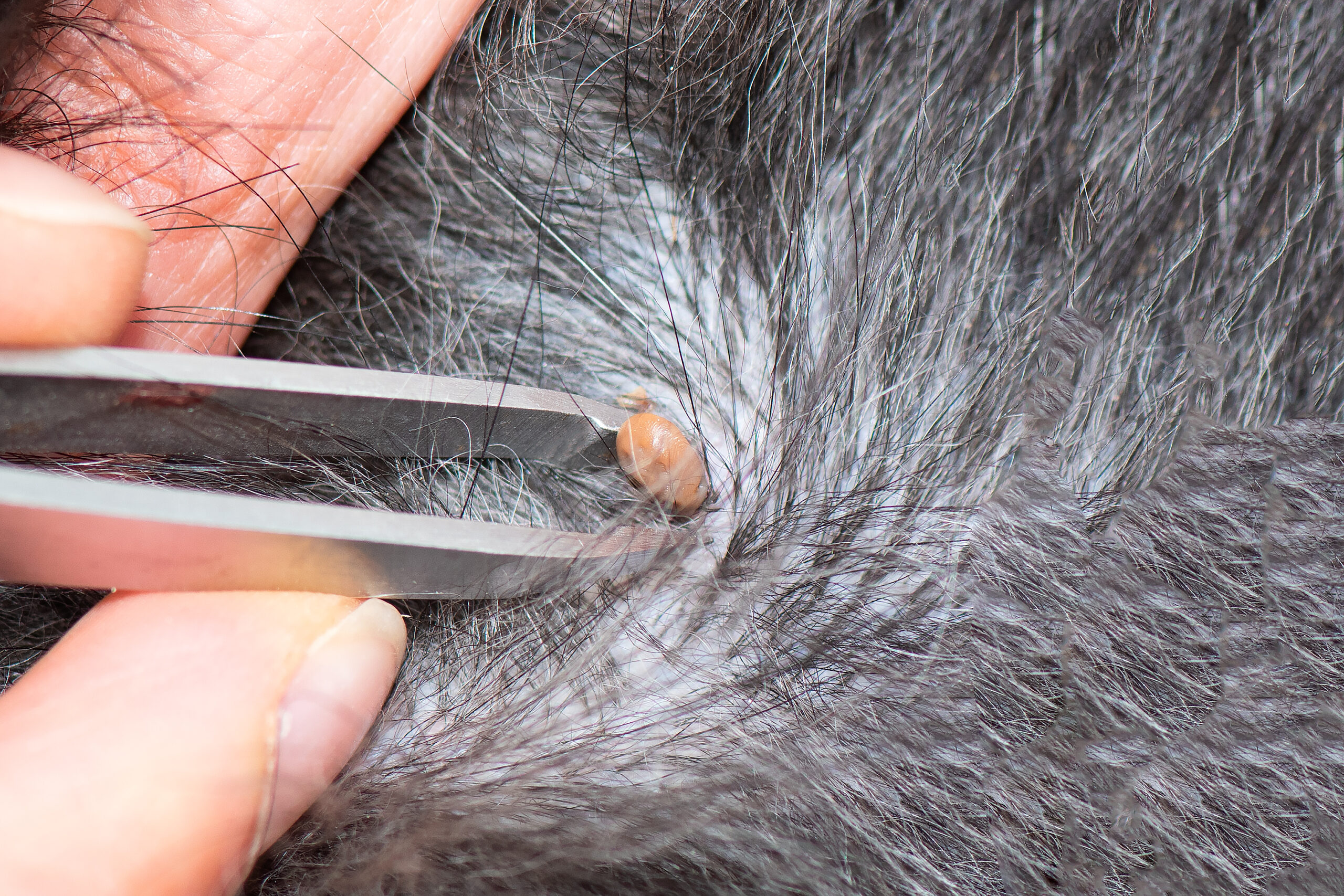
Found a Tick on Your Dog? Here Is What to Do Next
Ticks in Peterborough are active year-round, not just in spring and summer. In parks with tree cover and exposed leaf litter, there can be minimal snow on the ground even in winter, which means tick habitat in every season. Any time your dog is spending time outside in wooded or grassy areas, it is worth knowing what to do if you find one.
Here is a clear, practical guide for what to do if you find a tick, why testing matters even after it is removed, and how to protect your dog before one ever has the chance to attach.
A quick note on what ticks actually are
Ticks are not insects. They are arachnids, in the same family as spiders and mites, and all adult ticks have eight legs. They are parasites that survive by feeding on the blood of their host, which can include both pets and people.
What makes them particularly worth taking seriously is how they feed. They attach firmly, feed slowly, and can go unnoticed for several days. That slow, hidden feeding is part of why they are efficient carriers of disease.
In our region, the tick of greatest concern is the blacklegged tick, also called the deer tick, which is known to carry Lyme disease. Ontario has some of the highest proportions of blacklegged ticks in the country, and they are active from early spring through late fall in areas like Jackson Park, the Rotary Greenway Trail, wooded cottage properties, and even shaded backyard corners with leaf litter. For a full breakdown of the tick species found in Peterborough and the Kawarthas and where to watch for them, visit our earlier post on tick awareness and prevention.
How to remove a tick safely
If you find a tick on your dog, skip the home remedies. Applying petroleum jelly, grease, or heat does not work and can cause the tick to release more saliva into the bite, which increases the risk of disease transmission.
Here is what to do:
- Wear gloves before you touch the tick. Infectious agents can enter through breaks in your skin just from handling one.
- Use fine-tipped tweezers, a tick twister, or a tick key and grasp the tick as close to the skin as possible. Pull straight out with slow, steady pressure. Do not twist or jerk, as that can cause the mouth parts to break off and remain in the skin.
- It may take a minute or two of constant gentle pressure before the tick releases. Be patient.
- Once the tick is out, disinfect the bite area and your hands thoroughly with soap and water. If you want to save the tick for identification, seal it in a small container with rubbing alcohol and note the date. Your veterinarian can advise whether it needs further testing.
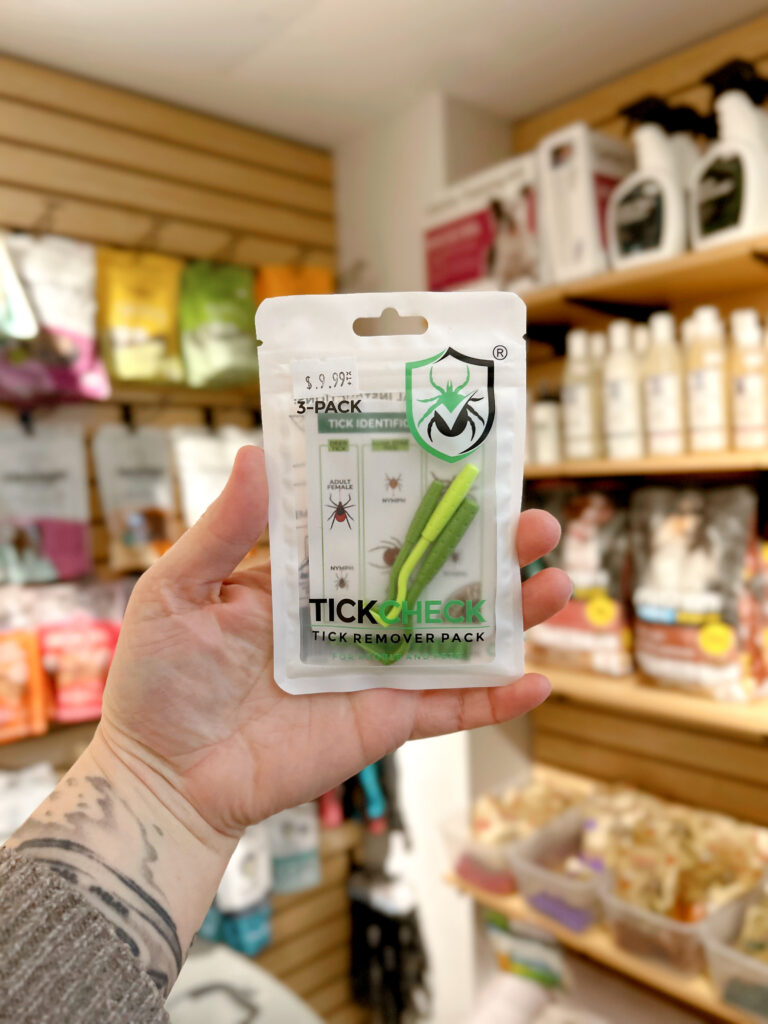
If you do not already have a tick removal tool at home, Jade’s Pet Boutique inside the Peterborough Humane Society carries tick keys and tick wipes, so you can pick one up the next time you visit. Having the right tool on hand means you are ready if you ever need it, without scrambling in the moment.

Jade’s also carries Tickless, a small, lightweight device that clips to your dog’s collar and emits ultrasonic pulses that deter ticks and fleas from latching on. It is chemical-free, scent-free, weather-resistant, and has shown 94% efficiency against ticks in clinical testing. It is a simple step that can reduce the chance of a tick ever getting the opportunity to attach in the first place. Purchases at Jade’s support the animals in our care.
Why testing matters, and when to do it
Removing a tick does not mean you are in the clear. Ticks in our region can transmit several diseases to dogs, and the challenge is that symptoms do not always appear right away. Some dogs show signs of illness weeks after a bite. Others show no signs at all, even when something has been transmitted.
This is where the 4Dx SNAP test comes in, and it is something we offer right here at our clinic.
What is the 4Dx SNAP test?
The 4Dx SNAP test is a quick in-clinic blood test that screens for four diseases at once: Lyme disease, anaplasmosis, ehrlichiosis, and heartworm. For dogs that spend time outdoors in our region, it is one of the most useful routine tests available.
Lyme disease, anaplasmosis, and ehrlichiosis are all bacterial infections transmitted by ticks. They share some similar symptoms, including lethargy, fever, joint pain or lameness, swollen lymph nodes, and loss of appetite, which can make them hard to distinguish without testing. Heartworm is transmitted by mosquitoes, not ticks, but is included in the same panel because it is another vector-borne disease that warrants annual screening in Ontario.
The test works by detecting antibodies, which are proteins your dog’s immune system produces in response to infection. For tick-borne diseases, a positive result tells your veterinarian that your dog has been exposed and flags that further evaluation is needed. A positive result on its own does not automatically mean your dog requires treatment, but it gives your vet the information to make that call thoughtfully.
When to test after a tick bite
Here is the piece that catches a lot of dog owners off guard: it takes four to six weeks after a tick bite for antibodies to become detectable. Testing right away will not give you a reliable result.
The right time to book your 4Dx SNAP test is four to six weeks after you found the tick. Mark it in your calendar now so it does not get forgotten.
Even without a known tick bite, annual 4Dx SNAP testing is recommended for dogs that spend regular time outdoors, especially in wooded or grassy areas. Early detection gives your vet the best opportunity to monitor and manage anything that shows up.
What to watch for in the weeks after a bite
Keep an eye on your dog in the weeks following a tick exposure. Signs that warrant a call to your vet include:
- Lethargy or unusual tiredness
- Fever
- Loss of appetite
- Joint swelling or sudden lameness
- Swollen lymph nodes
These signs can appear weeks after the original bite and are easy to attribute to something else. If you know a tick was involved, mention it when you call. That context helps your vet a lot.
Booking at the PHS clinic
The Peterborough Regional Spay/Neuter Clinic at the Peterborough Humane Society offers 4Dx SNAP testing as part of our wellness services. If your dog has been bitten, or if they spend regular time on trails and green spaces and have not been tested recently, this is a good appointment to book.
When you come in, you can also book a full Wellness Exam, which is a great opportunity to discuss flea and tick prevention with our team. We can help you find a prevention plan that fits your dog’s lifestyle, whether that is a topical treatment, a chewable, or another option. We also offer the Lyme vaccine, which is worth talking through with our team if your dog spends a lot of time in tick-prone areas.
You can book online at peterboroughhumanesociety.ca/clinic or by calling us at 705-775-9034.

Preventing tick exposure before it happens
A few practical steps go a long way:
- Talk to your veterinarian about a tick preventative that suits your dog’s size, age, and lifestyle. There are monthly topical options, chewables, and products that last three months. You can also book a Wellness Exam at our clinic to discuss flea and tick prevention directly with our team and find a plan that works for your dog.
- Keep your yard tidy. Trimmed grass, cleared brush, and reduced leaf litter mean fewer places for ticks to wait.
- After any outdoor time in grassy or wooded areas, check your dog thoroughly, even in winter. Ticks can be active year-round, particularly in parks where tree cover keeps leaf litter exposed and snow-free. Run your hands over their whole body and pay close attention to between the toes, behind the ears, under the collar, in the armpits, and under the tail.
And when you are visiting us, stop into Jade’s Pet Boutique inside the Peterborough Humane Society. In addition to Tickless, you will find tick keys, tick wipes, and other prevention tools to keep on hand at home and on the trail. Tickless is available in styles for both dogs and cats and can be used alongside traditional prevention products for added peace of mind. Our team can show you how everything works and help you find the right fit for your pet. Your purchase supports the animals in our care every time!